Computer science education for the AI era.
AI can write the code. Students still need to understand it. Thadus teaches algorithms, data, logic and systems, without syntax getting in the way.
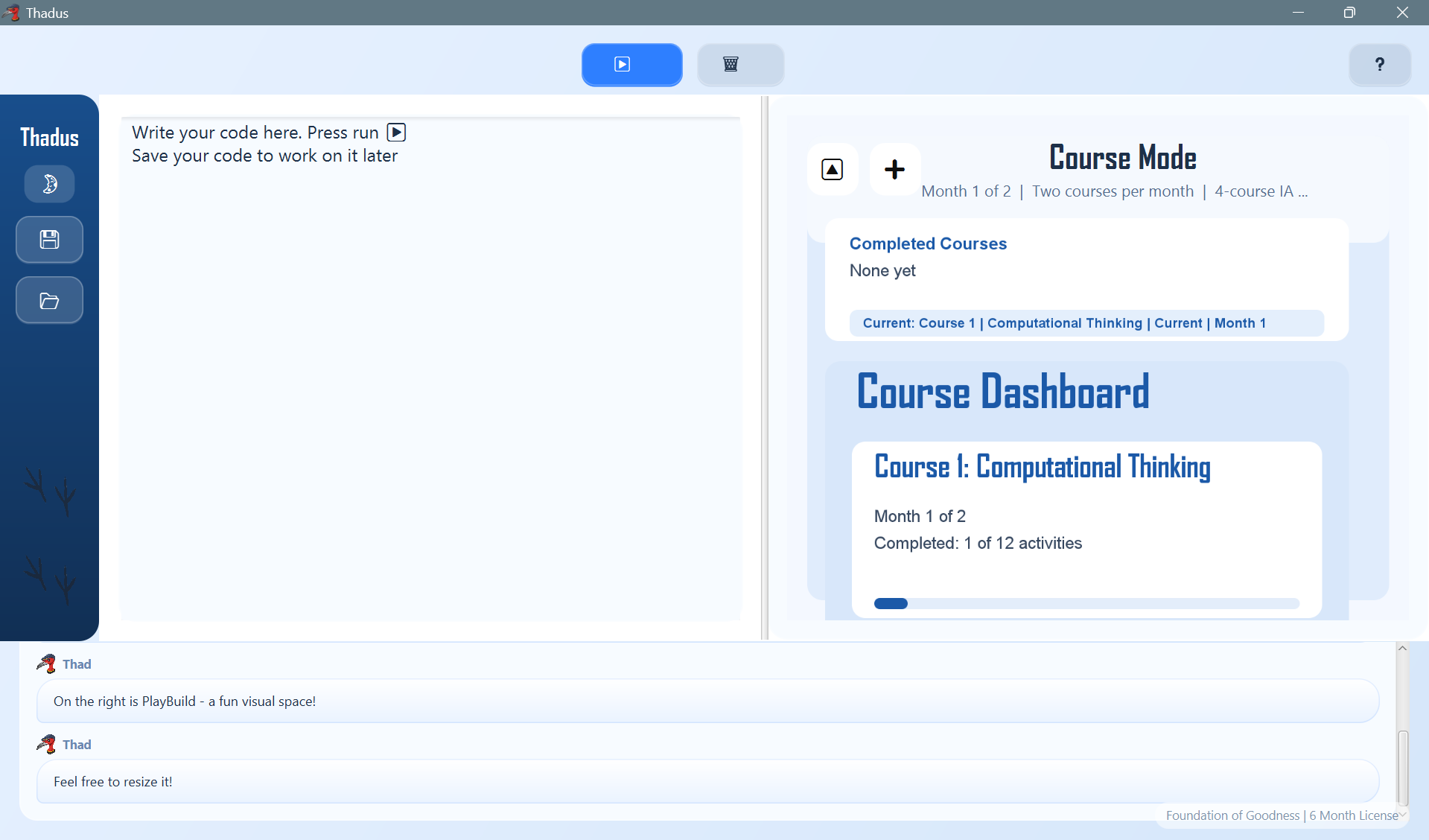
Thadus works like executable pseudocode. Plain-English commands, real programming ideas. Try it.
What we do
We build computer science education that works where most platforms can't: offline, on older computers, for students who have never written a line of code.
Is coding becoming obsolete?
Writing code manually is changing. Computer science isn't. GitHub found 92% of US enterprise developers already using AI coding tools. Memorising syntax matters less every year.
AI writes code.
It can produce working software from plain instructions, and it is improving fast.
Humans still need to understand systems.
Someone still has to define the problem and recognise when the output is wrong.
That's what Thadus teaches.
Students learn the concepts underneath the code, without the syntax in the way.
Current reach
- 1,000+active students
- 21community centres
- 5countries
- 67%improvement in digital confidence
Australia · Sri Lanka · India · Nepal · South Africa
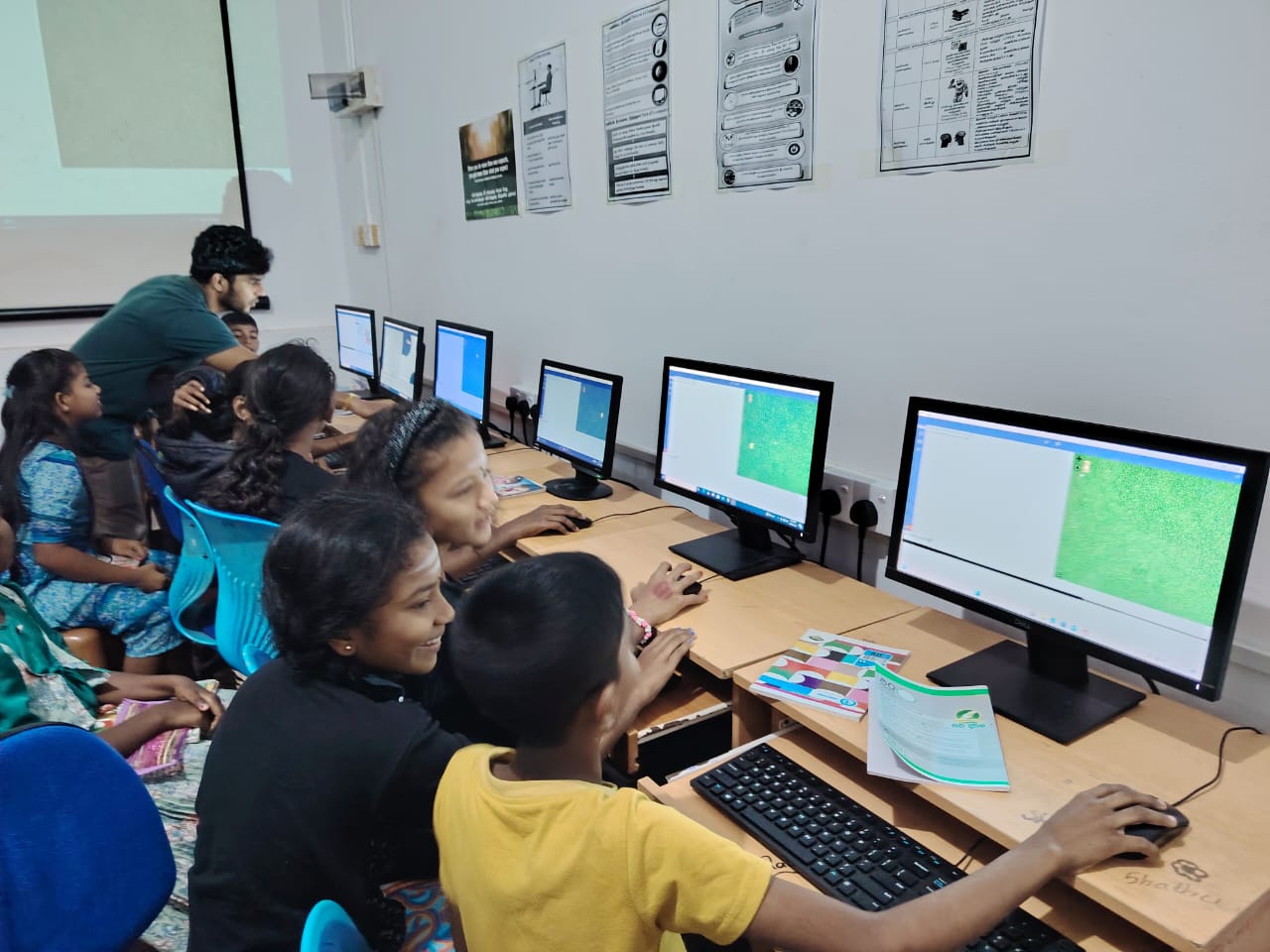
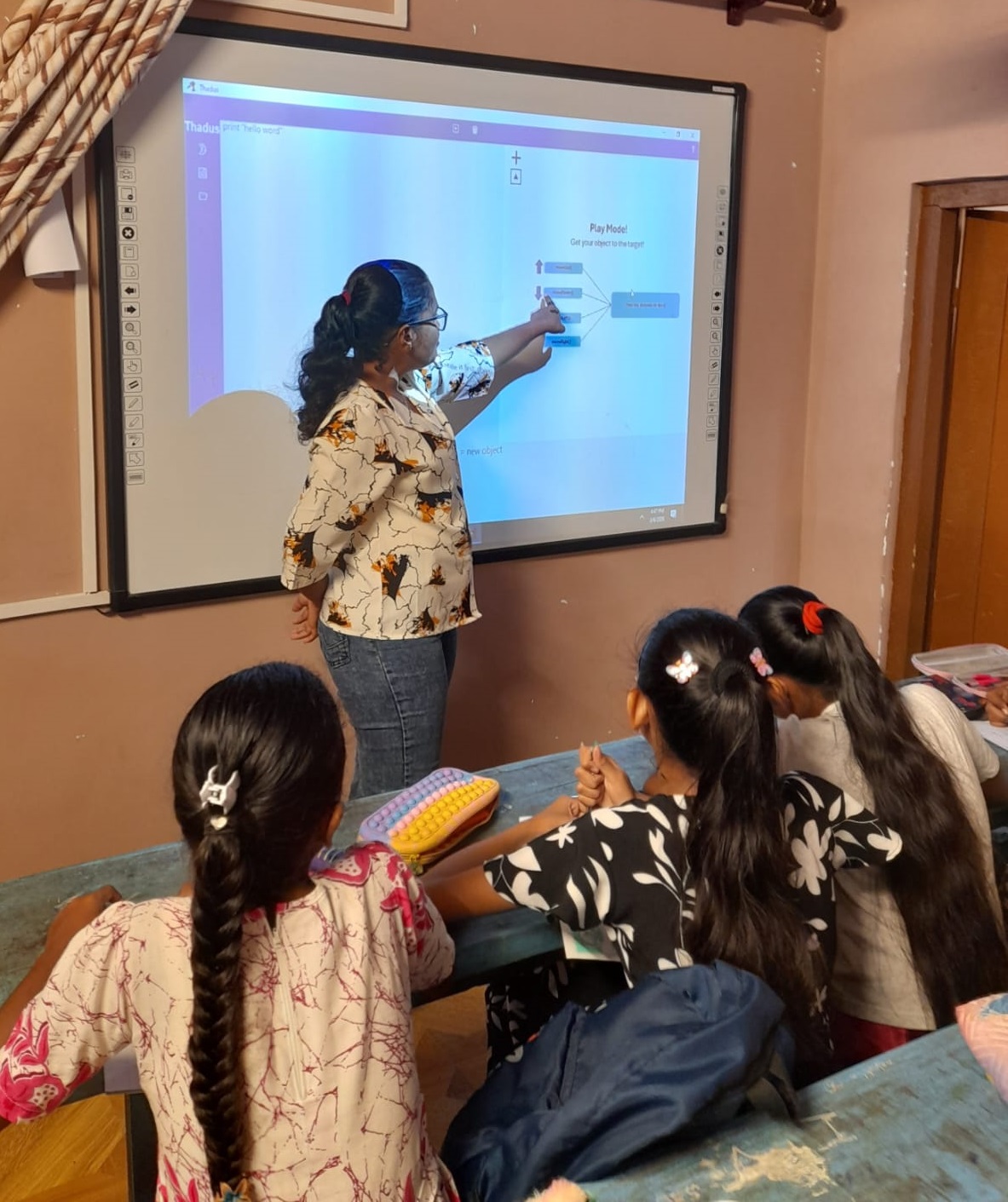
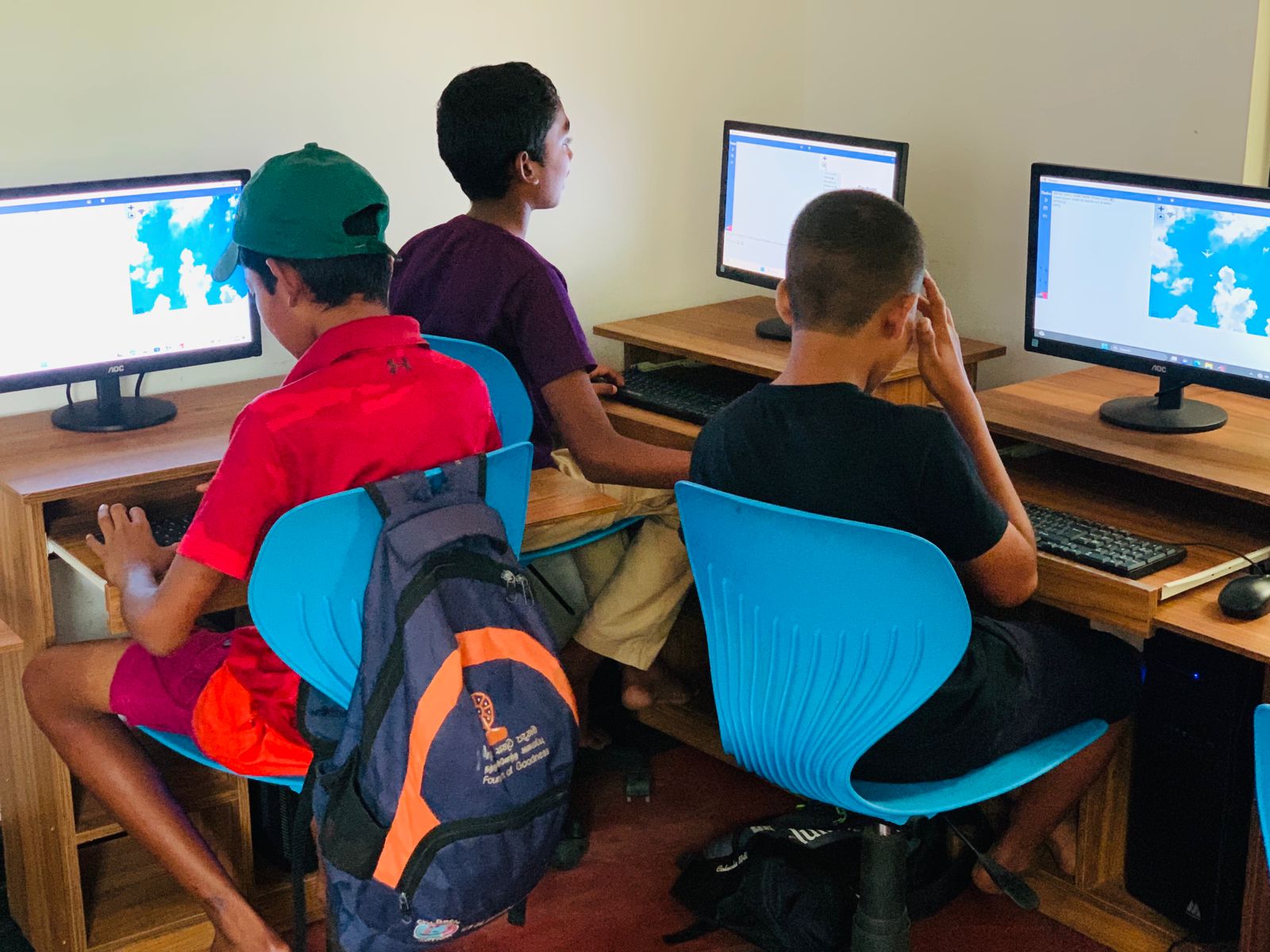
The skills behind technology are changing. AI and big data, technological literacy and systems thinking are among the fastest-growing skills in the global workforce through 2030. Source: World Economic Forum, Future of Jobs Report 2025.
Less syntax. More understanding.
Fully offline
Computer science without reliable internet. No connectivity required.
Executable pseudocode
Learn the concept before the syntax: plain-English commands, real programming ideas.
Built for the AI era
Students learn the logic underneath the code.
A launchpad, not a ceiling
Understand first. The concepts carry over to any professional language later.
Twelve structured courses
Algorithms, data, game dev, app design and more, structured for complete beginners. See the curriculum.
Understanding the system becomes more important
Thadus teaches the layer underneath: the ideas that remain valuable regardless of which language or AI tool eventually produces the code.
Algorithms
How problems are broken down and solved, step by step.
Data
How information is collected, transformed and interpreted.
Logic
How software makes decisions: conditions, branches, outcomes.
Systems
How different components work together to produce a result.
AI & machine learning
How intelligent systems process data, recognise patterns and make predictions.
Computational thinking
How to approach complex problems the way a computer would solve them.
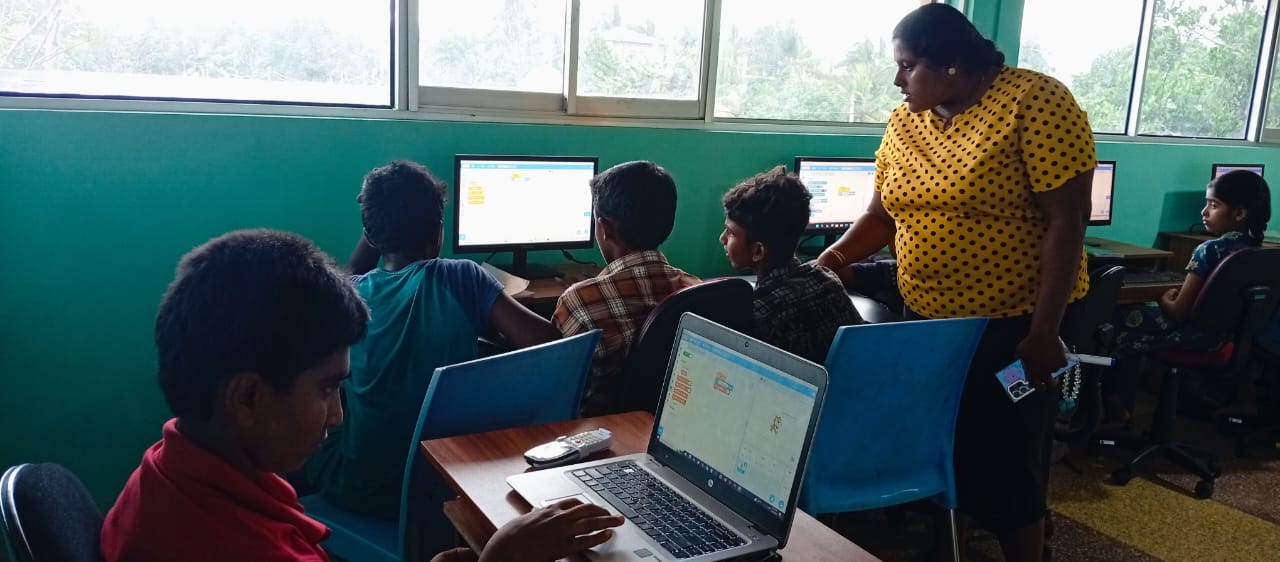
Schools, governments, charities
Schools
- Classroom deployment, fully offline
- Teacher training and onboarding
- Structured curriculum for Years 5–9
Governments
- Multi-site rollout with localisation
- National educator training
- Curriculum alignment and reporting
Charities
- No cost to the organisation
- Full platform, training and support
- For NGOs serving underserved communities
What educators are seeing
“What surprised me most was how quickly students stopped asking ‘what do I type?’ and started asking ‘why does it do that?’ That’s the shift every educator wants to see.”
“This is computer science that actually feels relevant right now. My students understand what AI is doing because they’ve already reasoned through classification and logic themselves. The engagement is completely different when the concepts connect to the real world.”
“We’ve tried other platforms. Thadus is the first one where students are learning computer science, not just copying code they don’t understand. The concept-first approach makes a real difference.”
Educate 4.0, Stellenbosch
A partner in South Africa on what changed for their students.
Featured on ABC News Australia
ABC News covered how CodeLabs brings computer science to students without reliable internet.
Follow us on Instagram
Reels and updates from the Thadus team.
From understanding the system to building on it
CodeLabs teaches students to read a program and know why it does what it does. Thadus Forge is where they put that to work: describe what you want, and the assistant writes a first version in Thadus, the same language they already read.
They steer it until it works, then publish it for other people to use. A homework planner for their year group, a savings tracker for something they are actually saving for.
- Say itDescribe what you want in your own words.
- Read itIt comes back in Thadus, close to plain English on purpose.
- Run itPress the buttons and find out whether it did what you meant.
- Steer itDecide what to keep, what to cut, what is still missing.
- Ship itPublish it, with their name on it.
Let's talk
Schools, governments and charities: get in touch to discuss a partnership.